
By Patrick McCreesh
In an episode of The Office, Michael Scott once said, “I am Beyoncé, always.” It was classic Michael—confident, absurd, completely missing the point. But buried in the comedy is a leadership truth we often ignore: sometimes, leaders assume they are perfectly aligned with the moment, when in fact, everything around them has already shifted.
As we look toward the future of organizations, the ground beneath us is moving—fast. Technological disruption, economic shifts, and hybrid work models aren’t just knocking on the door; they’ve already moved in and rearranged the furniture. Leaders who rely on the “what’s worked before” approach risk becoming relics—attached to past processes, cultures, or success metrics that no longer apply. And yet, the deeper challenge isn’t just about systems or strategy. It’s about the people within them—and the deeply human struggle of attachment and loss.
From the collapse of office routines during COVID-19 and our ensuing remote worklife to the ongoing whiplash of AI, employees are navigating a sense of dislocation. As Stuck reminds us, humans build attachments—not just to people, but to spaces, routines, even scents and sensations in the office. When these are disrupted, the response isn’t just inconvenience — it’s a sense of loss.
This is the paradox of modern leadership: in a world obsessed with speed and innovation, success is increasingly tied to a leader’s ability to slow down and see what their people are holding onto.
So what can today’s leaders do?
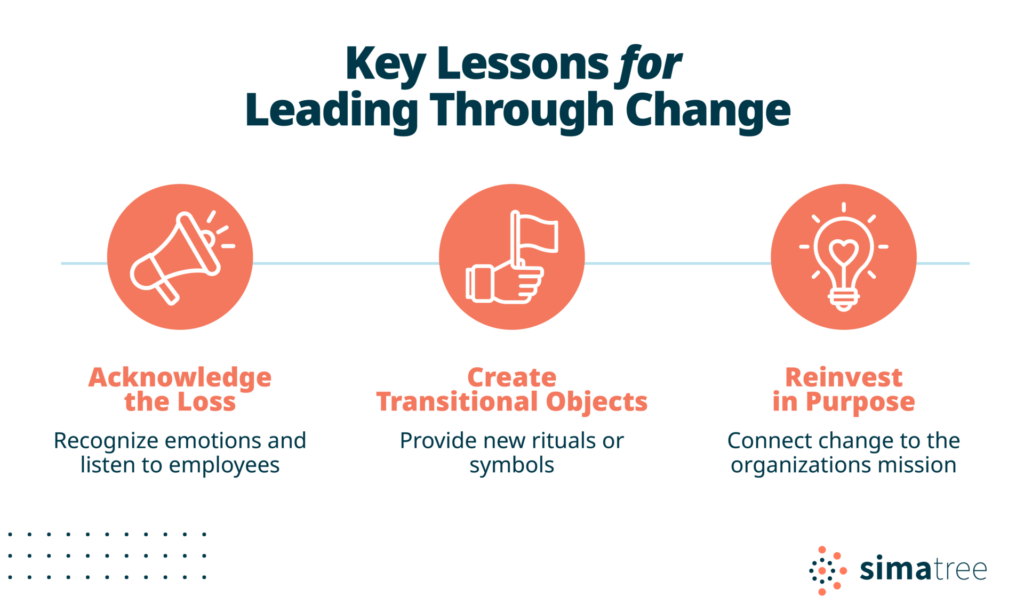
1. Acknowledge the Loss
Change isn’t just operational; it’s emotional. Leaders must begin conversations with a simple, powerful act: recognition. As outlined in “Loss in the Time of Covid,” leaders should share their own moments of disorientation and ask others what they miss. Start with, “What feels different to you right now?” It may not seem strategic, but it builds trust—and trust is the currency of change.
2. Create Transitional Objects
Just as e-readers helped traditional readers bridge the gap from books to digital, leaders must offer new rituals or symbols that provide continuity. Weekly team check-ins, digital coffee hours, or even shared objects can ease the transition between old and new ways of working.
3. Reinvest in Purpose
When the “why” is clear, the “what” becomes manageable. Whether navigating data strategy or reimagining the workplace, leaders must help employees reconnect with the organization’s deeper mission. Without a compelling why, change feels arbitrary. With it, it feels like progress.
The coming years will test every organization’s adaptability. But the real test isn’t how fast we can change—it’s how well we help our people carry forward what matters most, and leave behind what no longer serves. A common phrase has become – “Adapt or die.” But maybe first—let’s find out what folks are holding on to, find new things to focus, give them a compelling vision of the purpose, and see if they are willing to live through journey with us.