By Patrick McCreesh
In the show Parks and Recreation, Pawnee’s government is temporarily shut down due to budget cuts. All non-essential departments—including the Parks Department—are furloughed. Employees cannot work, city services are suspended, and uncertainty spreads throughout the town.
Employees like Leslie Knope, who thrive on purpose and action, experience profound frustration and demoralization. Daily routines vanish, projects stall (such as the Pawnee Harvest Festival plans), and key community initiatives are put on indefinite hold.
Public trust erodes, internal staff communication becomes more strained, and tensions between departments (e.g., Parks vs. Budget Office) escalate.
The evolution of the human brain helps explain why.
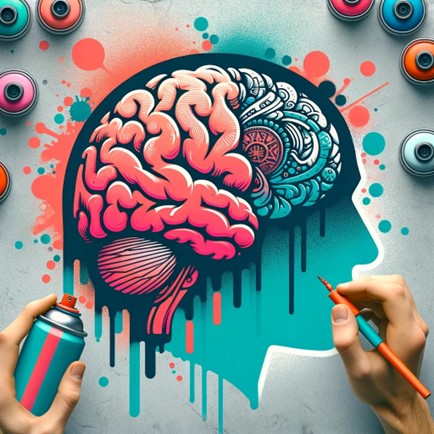
The human brain has evolved over millions of years to prioritize survival. It is wired to detect threats, favor routine, and resist uncertainty. These evolutionary traits once protected us from predators, but today they influence how we react to organizational change. Familiarity feels safe, while the unfamiliar triggers stress responses. Understanding this evolutionary wiring is essential for leaders—effective change management must align with how the brain naturally processes fear, attachment, and adaptation.
In Stuck, Grady and McCreesh explain that change—even in modern, low-risk environments—activates ancient systems in the brain designed to detect threats. These systems don’t distinguish between a prowling predator and a new software platform. Both trigger the same basic reaction: fear, resistance, retreat.
When organizations roll out change—new structures, tools, or processes—they often forget this biological fact. They treat change as a rational task to be managed, rather than an emotional journey to be led. This is why employees get Stuck. Not because they are stubborn, but because their brains are doing exactly what they were built to do: protect them from the unknown.
Change management, then, becomes less about checklists and more about chemistry. It’s about managing emotional responses as much as project milestones. Leaders who understand this shift can move their organizations from a state of resistance to one of resilience.
One of the key neurological factors is attachment. The human brain forms connections—attachments—to people, routines, spaces, even smells. When those attachments are disrupted, people experience loss. This is why even small changes can create outsized reactions. When a favorite chair disappears or a team member transfers, it can destabilize someone’s sense of control and identity.
This is where change management shines. Done right, it becomes a tool not just for execution, but for evolution. It aligns with how the brain learns, adapts, and reconnects.
The truth is, the brain isn’t opposed to change. It just wants to feel safe first. When leaders manage change as a brain-based process, they unlock not just compliance—but creativity. Not just adoption—but belief.
In the end, evolution didn’t stop at the cortex. It continues every time we make a change. The real question for leaders is: are you evolving with your people, or just expecting them to catch up?