
By Patrick McCreesh
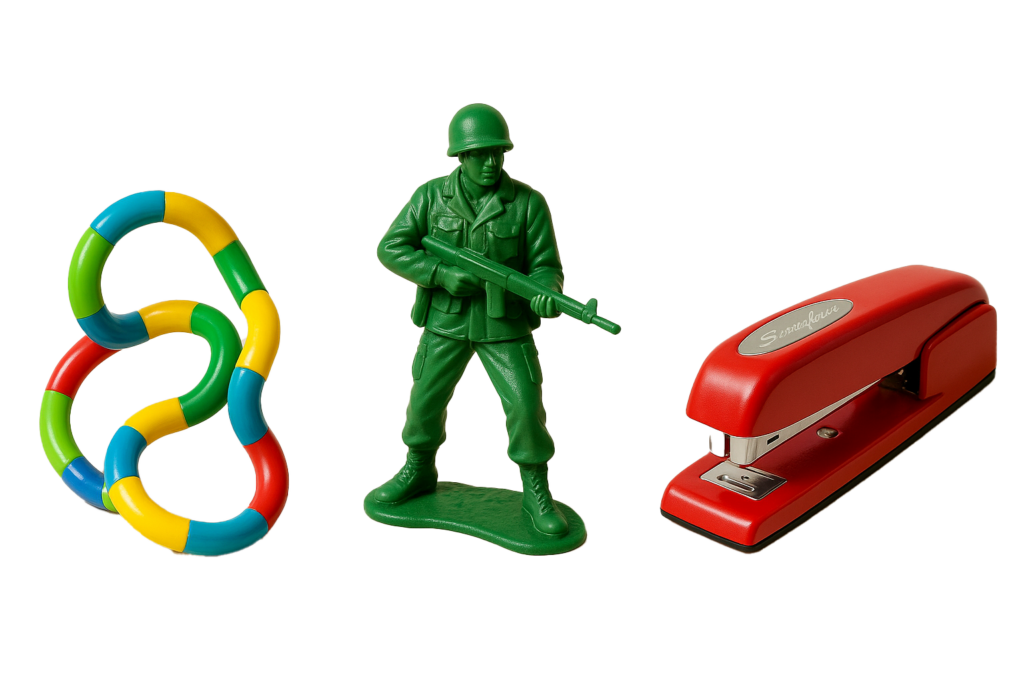
In the first season of Ted Lasso, there’s a scene where Ted gifts each of his players a small toy soldier before a big game. It’s a small gesture, almost laughably simple, but it resonates. Each player, carrying a token of belief, seems a little less alone. That, in essence, is the magic of a transitional object.
The idea of transitional objects isn’t new. Rooted in attachment theory, these objects—whether physical or symbolic—help us bridge the emotional gap between what we lose and what we must become. They are the handrails we grab onto while walking the tightrope of change.
Transitional objects, first popularized by psychoanalyst Donald Winnicott, describe tangible or symbolic items that help individuals navigate transitions—providing comfort when familiar routines, people, or places are no longer available. In Loss in the Time of Covid, Grady and McCreesh explain that during crises like the pandemic, transitional objects become critical tools for leaders managing profound disruption. Simple acts, like introducing a team mascot on virtual calls or instituting a shared ritual (like lunch over Zoom), helped recreate some of the emotional glue lost when office doors closed overnight.
During the early months of the COVID-19 pandemic, Victoria Grady and Patrick McCreesh noted in Loss in the Time of Covid that leaders who created “transitional objects” for their teams helped ease the profound sense of workplace loss. A simple team ritual, like shared virtual lunches, became the new front desk greeting or the casual chat by the water cooler. These new practices gave employees something tangible to anchor themselves to when familiar routines disappeared overnight.
Transitional objects aren’t just for times of crisis. They quietly weave themselves into the very fabric of how we adapt and evolve. Take Ruth from the ancient story recounted in Three Stories. Facing the loss of her husband and homeland, Ruth could have returned to her old life in Moab. Instead, she clung to Naomi, her mother-in-law, declaring, “I will go where you go.” Naomi herself became Ruth’s transitional object—a human anchor carrying her into a new life.
Modern workplaces mirror Ruth’s journey more than we might think. As companies rush to adopt new technologies, change management experts recognize that employees aren’t just resisting new systems—they’re mourning the loss of old anchors. In fact, attachment to objects, cultures, and even outdated processes explains much of why teams get Stuck during transitions.
One of the most vivid pop-culture illustrations of attachment (and its messy consequences) comes from Office Space. Milton’s red Swingline stapler is more than office equipment—it’s a lifeline. When it’s taken from him, his response—burning down the building—might seem extreme, but it is attachment behavior at its purest.
The solution isn’t to scoff at these attachments. Instead, leaders must understand and honor them. As Why Attachment Matters explains, by recognizing the tangible and intangible anchors employees rely on, leaders can design smoother transitions. Transitional objects—whether a small team ritual, a symbolic gift, or a new cultural practice—create emotional continuity.
The Beatles once sang, “All you need is love,” and in the world of change management, love often shows up as understanding the quiet but powerful need for connection. Transitional objects are not just sentimental relics. They are essential tools for navigating the uncertain path from what was to what could be.
In a world moving faster than ever, slowing down to offer a bobblehead, a coffee ritual, or even a symbolic stapler might just be the most revolutionary act of leadership we can offer.