
By Catherine Quinn
Building a strategic plan is no easy feat. You’ve analyzed internal data and market data, conducted a competitor analysis, interviewed key leaders across your organization, built a Business Model Canvas, synthesized all those inputs into a cascading set of goals and objectives, identified owners, set metrics, and word smithed… and word smithed… and word smithed. And finally! You have your strategic plan. It’s tempting to assume that this is enough – the plan is written down, so surely it will… just… happen? Not quite. In fact, 90% of strategies fail.1 The planning is critical, but it’s just the start.
So, how do you turn those plans into reality? A dedicated Portfolio Management Office can drive strategy execution, bridging the executive leadership team and individual objective owners. Core responsibilities of this team include:
- Strategic Plan Stewardship. The team facilitates alignment of all strategic plan goals and objectives, including coordinating resources and dependencies for cross-functional objectives. Quarterly priority check-ins with leadership ensure continual alignment of current strategic execution foci relative to the current internal and external environment – especially if unexpected changes have occurred since plan creation.
- Project Management Governance. The team develops and maintains a project management toolkit, including standard project initiation, monitoring, and closing processes. This ensures that all project teams manage execution of their individual objectives based on best practices; additionally, a consistent project management approach facilitates holistic portfolio reporting.
- Risk Management. With a team member embedded in each project, this centralized office is poised to help project teams identify and manage risk. While some risks will be project-specific, others may have wider reaching impacts; this Portfolio Management Office can escalate risks to the executive leadership team or raise to other project teams as appropriate.
- Change Management. Often, strategic objectives create change in an organization. Like the role this team plays in standardizing project management approaches, it should drive change management strategies for all strategic projects. This includes both project-specific strategies and portfolio-level strategies, ensuring that the organization is not overrun by too much change at once.
- Reporting. The Portfolio Management Office is responsible for standard portfolio reporting, both detailed executive-level reporting and summary organization-wide reporting. At the executive level, reporting should enable decision-making and interdepartmental collaboration. Reporting should include any success metrics defined in the strategic plan. For the broader organization, reporting should demonstrate follow-through on the promises implicit in the strategic plan. This transparency drives alignment across the organization, such that individuals can see how their day-to-day drives the overall strategy.
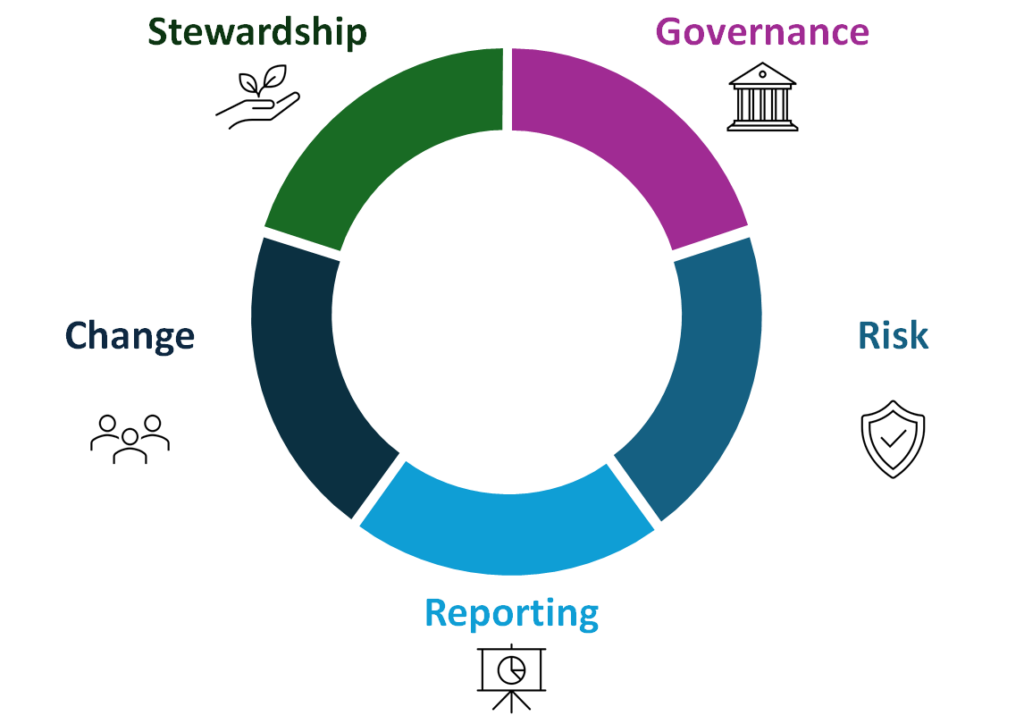
By centralizing these responsibilities in a Portfolio Management Office, project teams can focus on project execution and the executive team can focus on day-to-day operations unless explicitly pulled in by the Portfolio Management Office for a discrete decision. The dedicated Portfolio Management Office ensures that not only are all strategic objectives executed, but that they are executed in a holistic, coordinated manner. In short, the Portfolio Management Office drives the overall strategy execution – turning the plan into action.
1 https://online.hbs.edu/blog/post/why-do-strategic-plans-fail